FRP-Timber Composite Sections
Part of the Timber & Bio-Based Construction research theme.
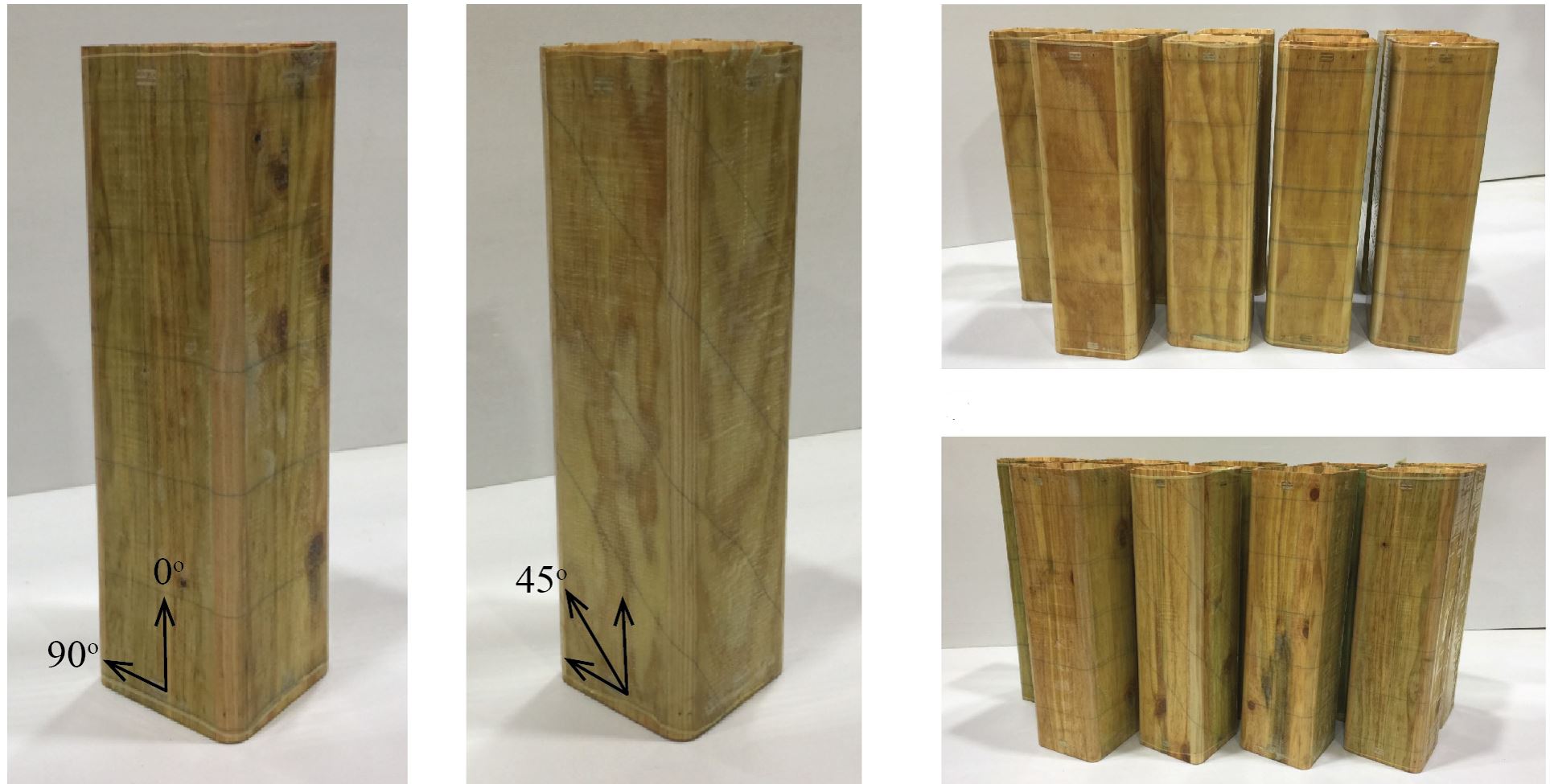
Hybrid FRP-timber (HFT) structures combine fibre reinforced polymer (FRP) with timber veneers to form lightweight, high-performance structural members, optimised for composite properties and load-bearing capacity. These members exploit the orthotropic properties of both materials by aligning fibre directions, and use efficient thin-walled cross-sections. Further information: DOI:10.1177/1369433217739709. Related work on hybrid timber floor panels is described under FRP-Timber Composite Panels.
Folded Hybrid FRP-Timber Sections
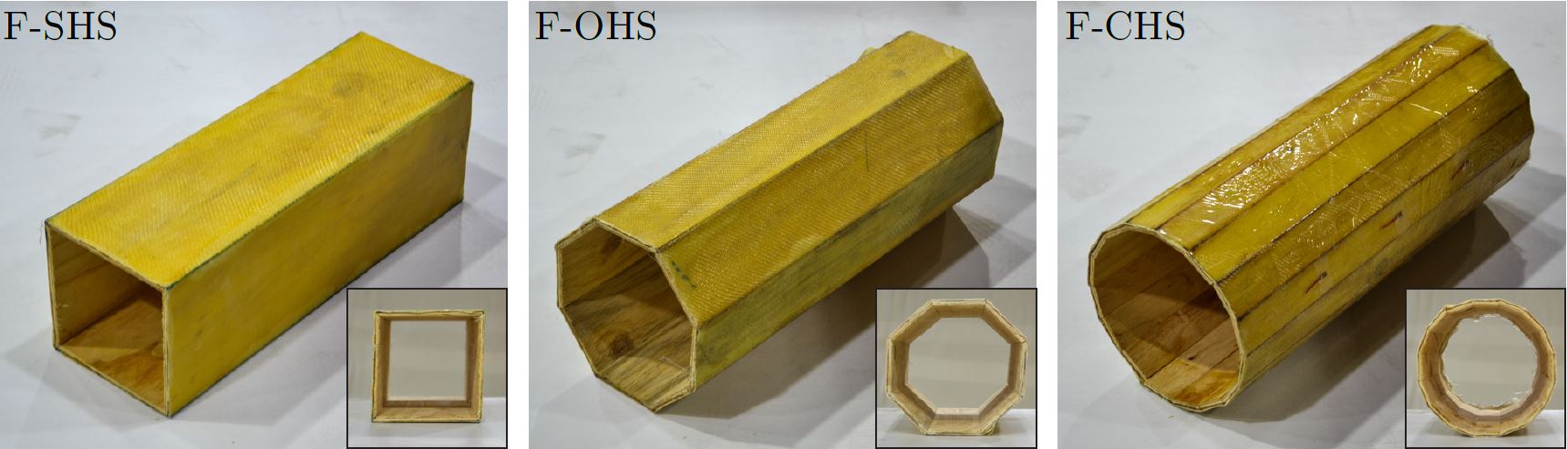
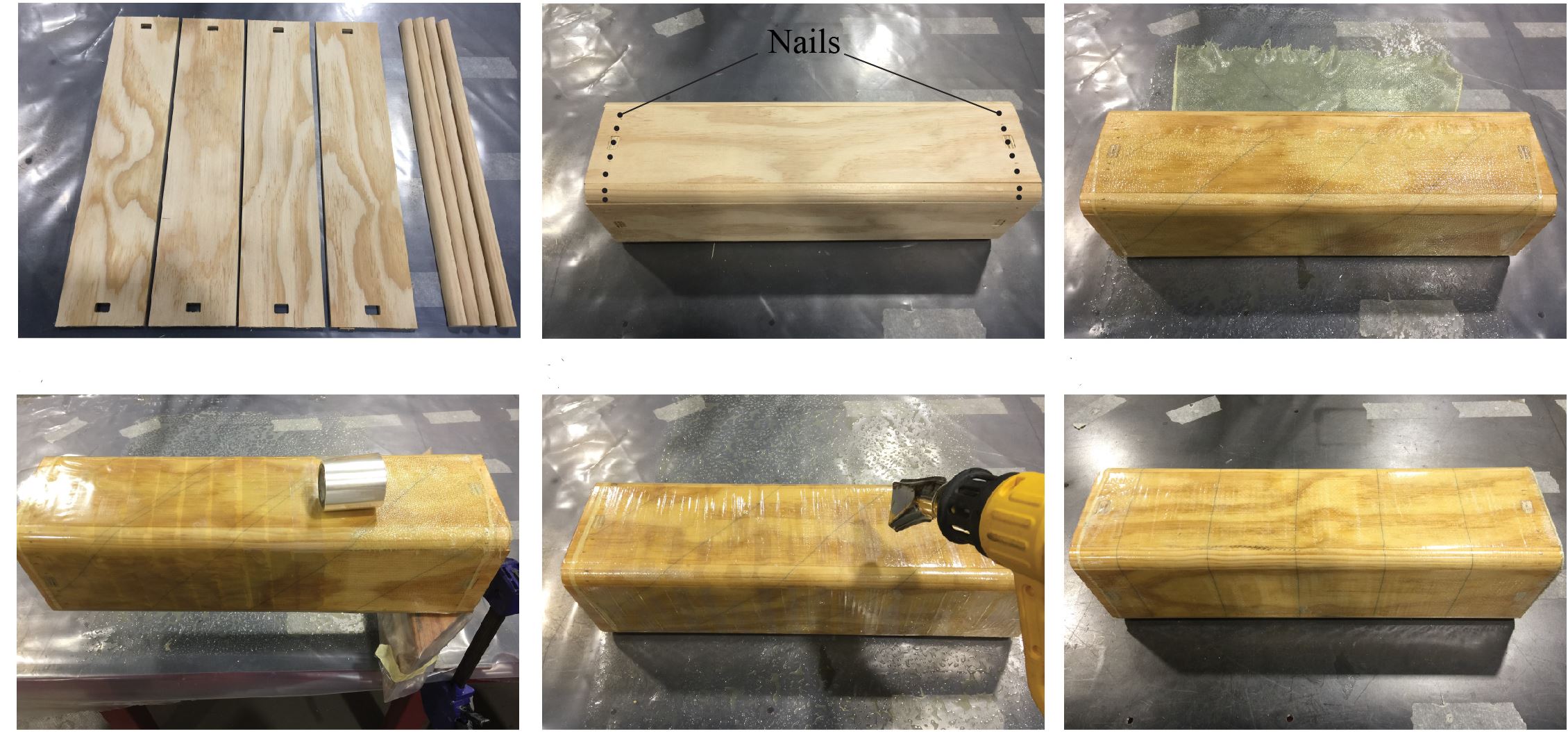
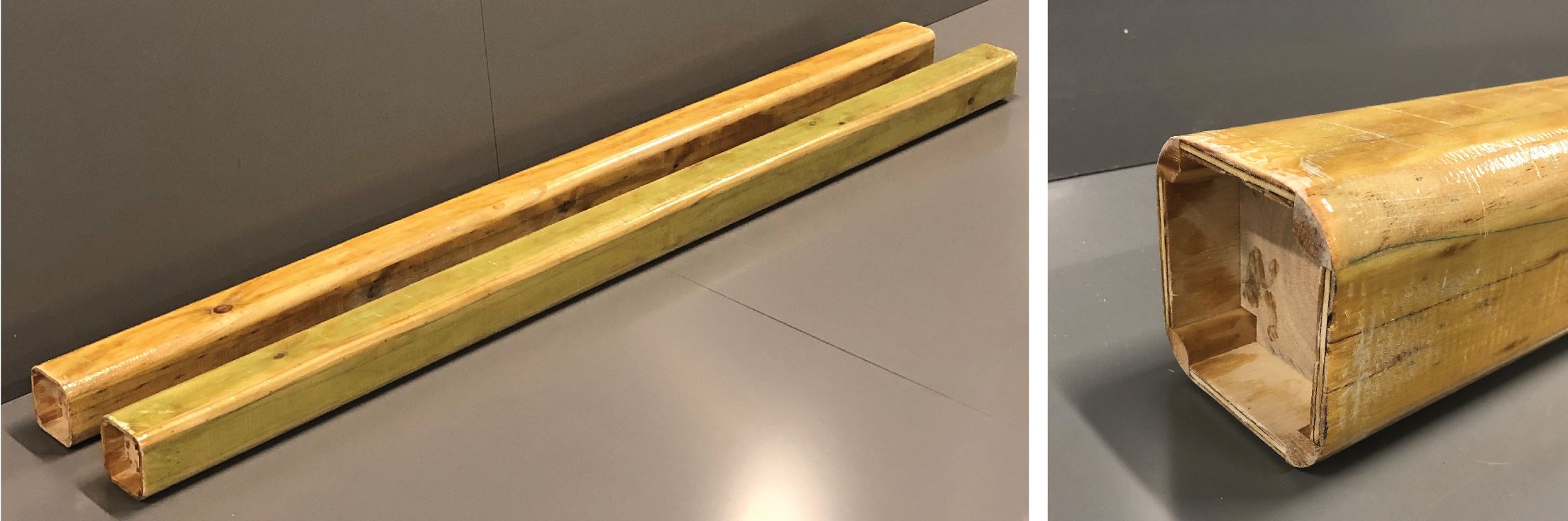
Two folding fabrication processes for HFT thin-walled sections extended the geometric and material design options for these members. The processes were first applied to regular hollow sections, and a geometric design method was presented for any folded structure whose cross-section is a non-intersecting polygonal chain. Experiments showed that folded HFT columns had double the compressive capacity of plywood-only columns, and a weight-specific compressive strength comparable to commercial steel hollow sections. Further information: DOI:10.1016/j.tws.2017.10.007.
Modular HFT Sections
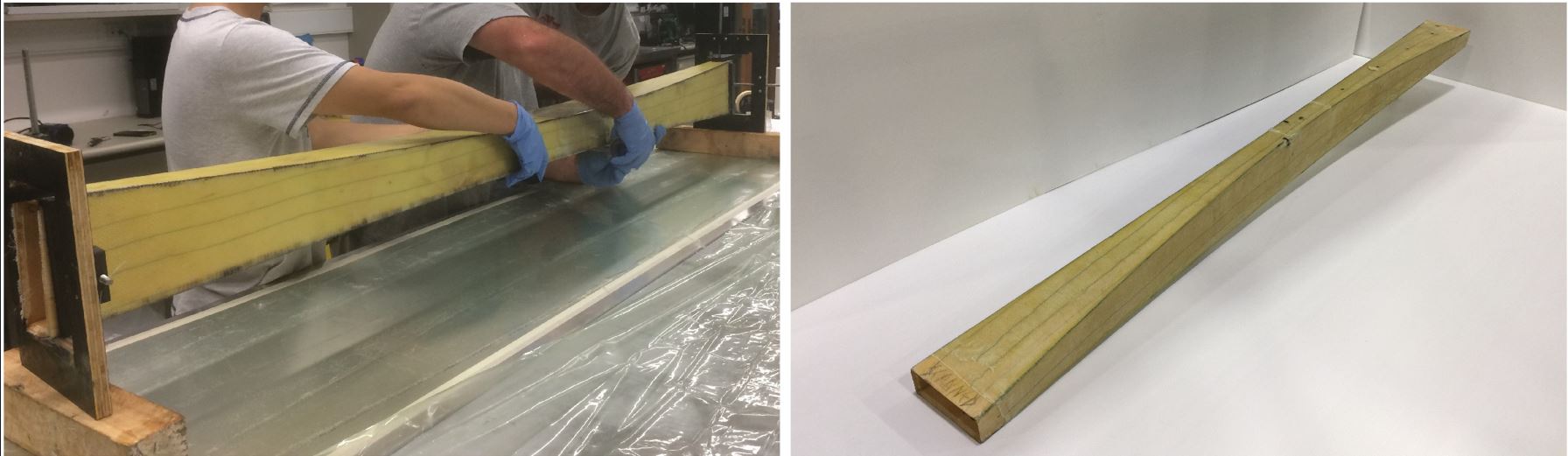
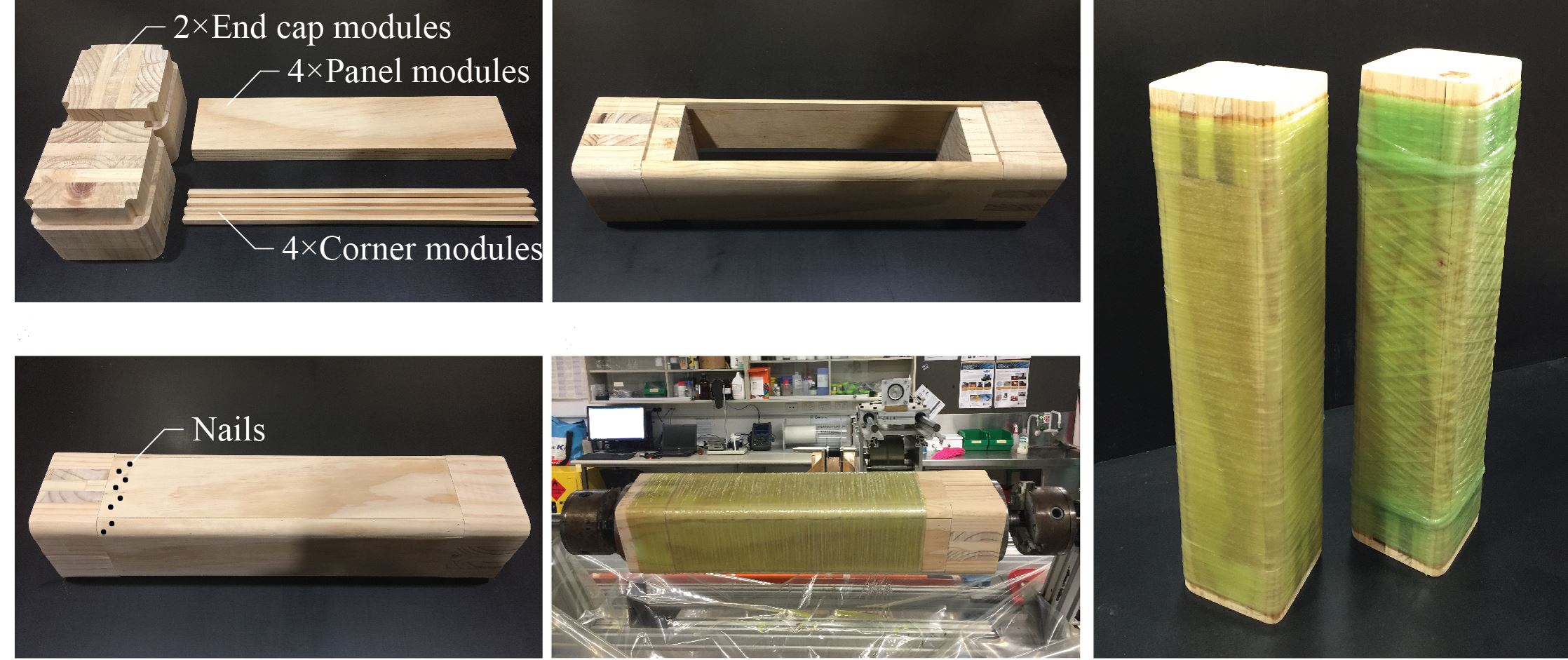
An improved ‘modular’ manufacturing method built on the folded HFT sections. The method was demonstrated on structural square hollow sections, with experimental and numerical studies of stub columns under uniaxial compression examining how the choice of FRP and timber materials affected structural performance. Wrapping with glass fibre reinforced polymer (GFRP) changed the failure mode from buckling to crushing, and strength and stiffness increased as GFRP layers were added. Compared with the earlier folded HFT sections, modular HFT sections had 69% higher strength and a 38% higher strength-to-weight ratio. Further information: DOI:10.1016/j.compstruct.2020.113506.
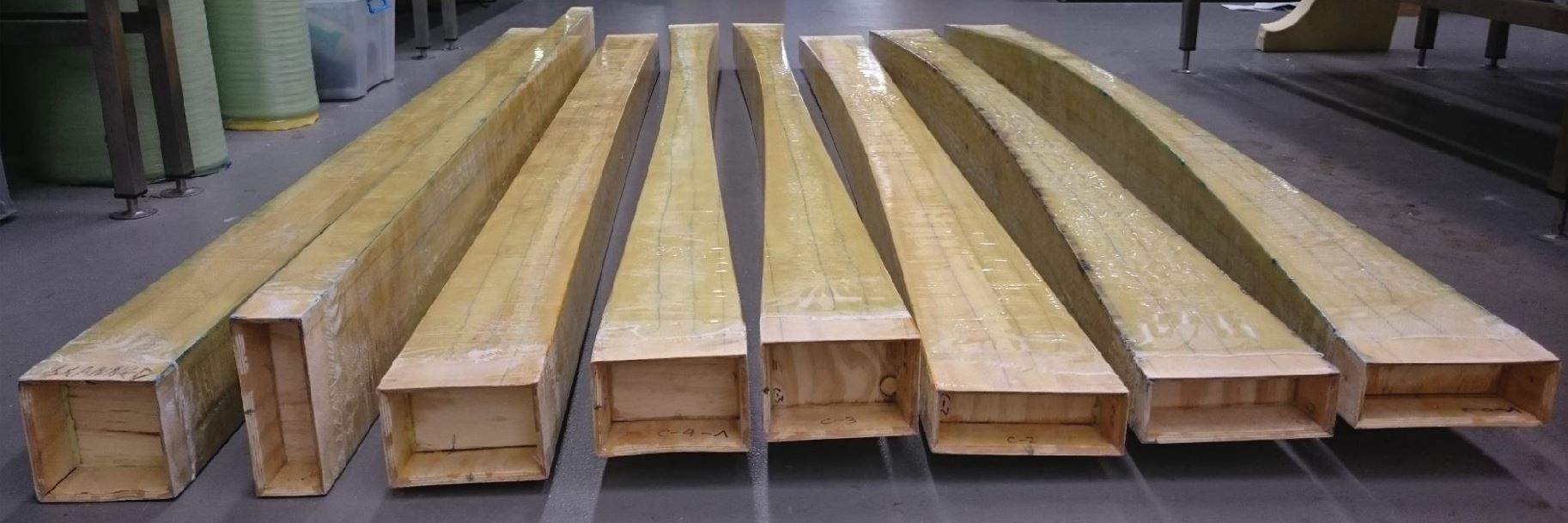
The modular method has since been extended to thin-walled beams (DOI:10.1016/j.conbuildmat.2024.136705), and to filament-wound sections, assessed for both prefabrication efficiency and compression performance (DOI:10.1016/j.istruc.2026.111374).
Prototypes and Exhibitions

Related Publications
Cui, W., Gattas, J. M., & Heitzmann, M. T. (2026). Filament-wound modular hybrid FRP-timber thin-walled sections: Prefabrication efficiency and compression performance. Structures, 86, 111374. https://doi.org/10.1016/j.istruc.2026.111374
Cui, W., Gattas, J. M., & Heitzmann, M. T. (2024). Manufacture and structural performance of modular hybrid FRP–timber thin-walled beams. Construction and Building Materials, 435, 136705. https://doi.org/10.1016/j.conbuildmat.2024.136705
Cui, W., Fernando, D., Heitzmann, M., & Gattas, J. M. (2021). Manufacture and structural performance of modular hybrid FRP-timber thin-walled columns. Composite Structures, 260, 113506. https://doi.org/10.1016/j.compstruct.2020.113506
Gattas, J. M., O’Dwyer, M. L., Heitzmann, M. T., Fernando, D., & Teng, J. (2018). Folded hybrid FRP-timber sections: Concept, geometric design and experimental behaviour. Thin-Walled Structures, 122, 182–192. https://doi.org/10.1016/j.tws.2017.10.007
Fernando, D., Teng, J., Gattas, J., & Heitzmann, M. (2017). Hybrid fibre-reinforced polymer–timber thin-walled structural members. Advances in Structural Engineering, 21(9), 1409–1417. https://doi.org/10.1177/1369433217739709
Hansen, B., Tan, J., Gattas, J. M., Fernando, D., & Heitzmann, M. (2016). Folded fabrication of FRP-timber thin-walled beams with novel non-uniform cross-sections. In World conference on timber engineering. Vienna University of Technology. Retrieved from https://espace.library.uq.edu.au/view/UQ:499767
Fernando, D., Gattas, J. M., Teng, J. G., & Heitzmann, M. (2015). Hybrid thin-walled members made of FRP and timber. In The 12th international symposium on fiber reinforced polymers for reinforced concrete structures (FRPRCS-12) and the 5th asia-pacific conference on fiber reinforced polymers in structures (APFIS-2015) joint conference. Retrieved from https://espace.library.uq.edu.au/view/UQ:298c828