Scanning and Sensing
Part of the Computational Design & Fabrication research theme.
Laser scanning, aerial LiDAR, and camera images can capture the geometry and condition of structures quickly and at scale. Research in the Lab develops methods that turn this data into reliable structural information. Related work on design automation is described under Computational Structural Design.
Point Clouds of Reinforcement Cages
Two methods processed point clouds of bridge girder reinforcement cages, to improve quality control in construction. An extended slicing method first segmented and classified 3D rebar within complex cages. A semantic enrichment method then inferred detailed data on individual rebar shapes, refining accuracy. Tested on two point clouds collected on site, the methods gave an average positional error under 2 mm and 0.1°, and a 5% error in rebar length, reduced to 1% after enrichment. The method, which covered rebar identification, separation, and grouping, could be adapted to other types of reinforcement cage. Further information: DOI:10.1016/j.autcon.2022.104334.


Bridge Asset Data from Aerial LiDAR
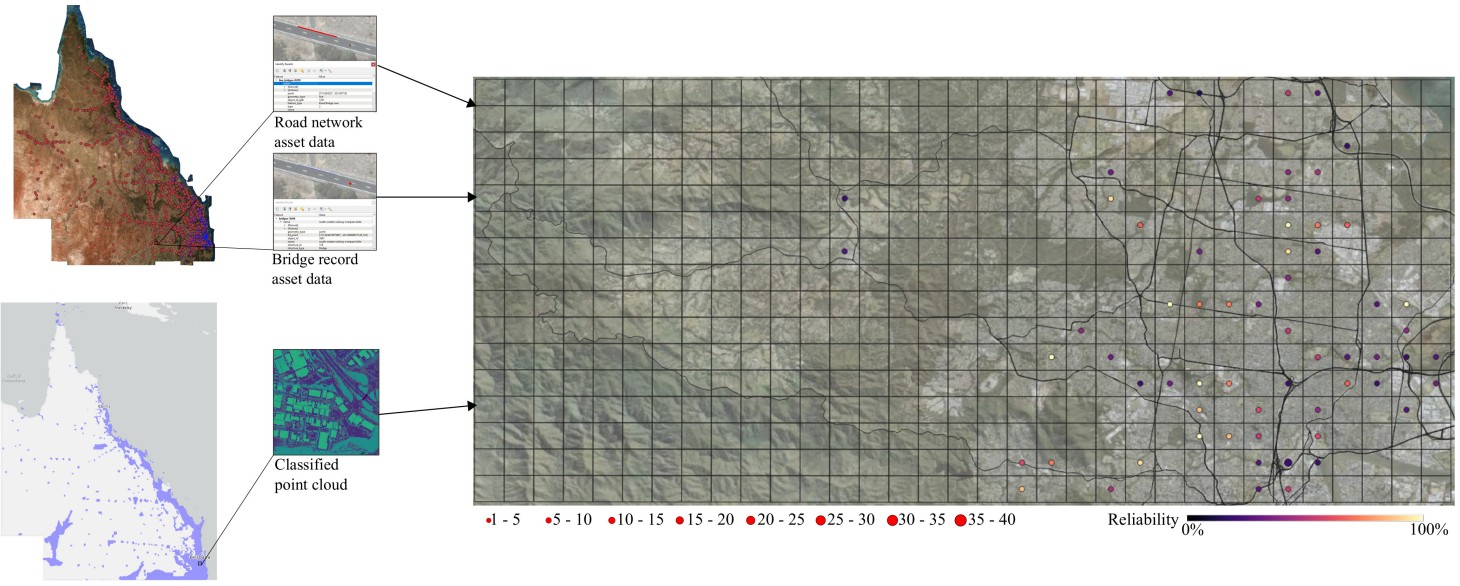
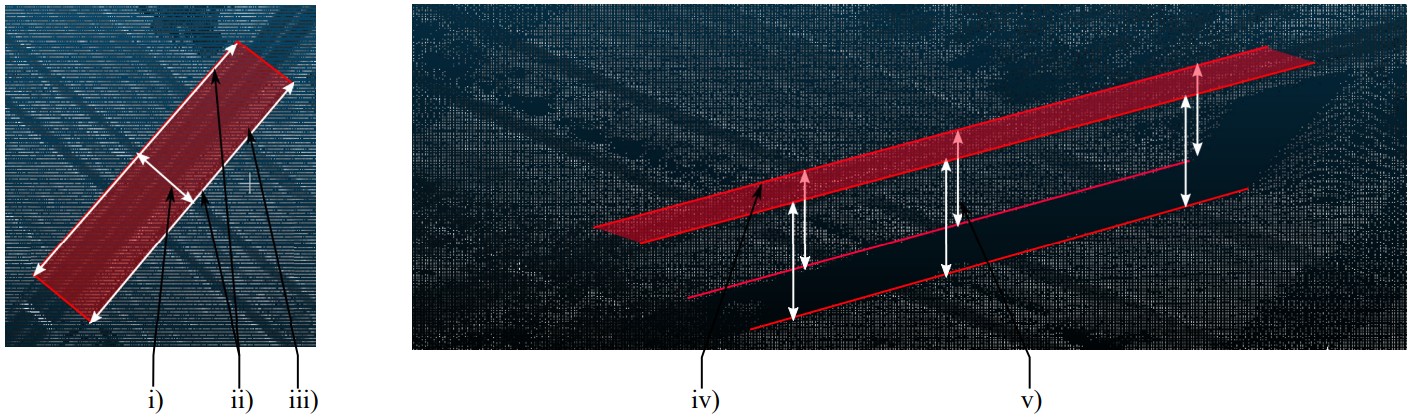
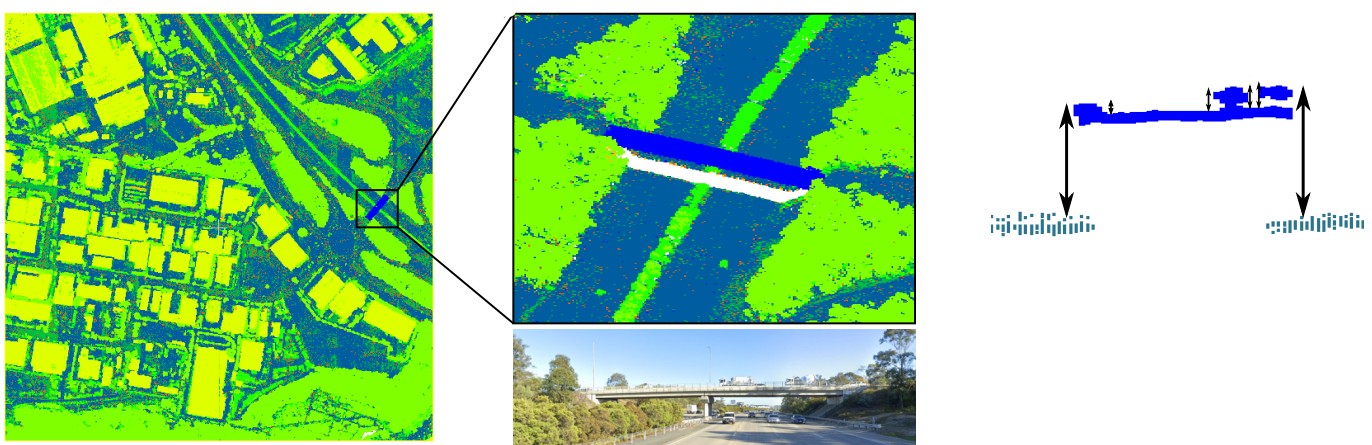
Road network managers rely on accurate bridge asset records, but collecting and maintaining them across a network is costly. Methods were developed to detect and measure bridges from public aerial LiDAR at network scale, where structure types, environments, and data quality all vary. Two methods, based on geometric segmentation and on point classification, identified bridges with average accuracies of 64% and 93% respectively across 6 km² of public data. Bridge measurements from aerial LiDAR were also benchmarked for the first time, with median accuracies of 90% for length and 66% for width. Further information: DOI:10.1080/14488353.2025.2533670.
A fuzzy logic algorithm then merged existing asset records, road network data, and processed LiDAR into a single set of bridge records, each with a reliability measure, so that asset managers could verify and enhance their data. The method was applied across 528 km² of South-East Queensland. Further information: DOI:10.1016/j.aei.2025.103564.
Camera-Based Sensing
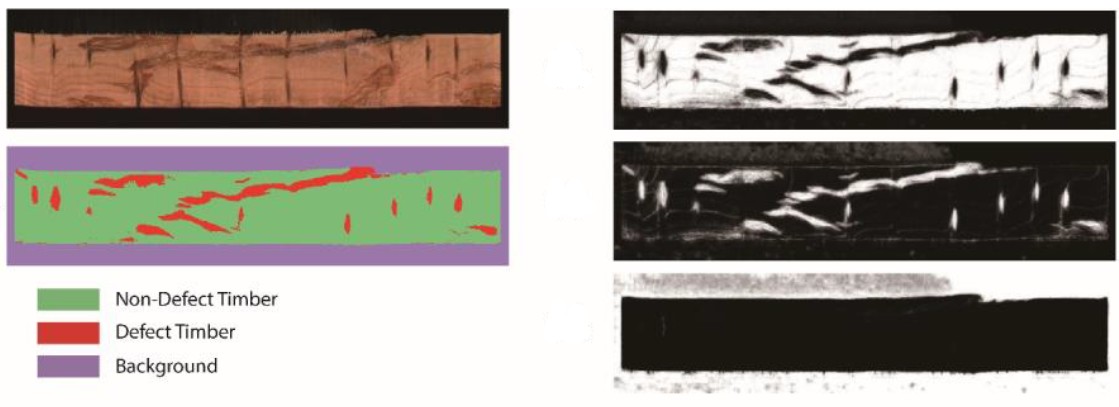
Camera images and video are a low-cost source of structural information. Out-of-grade timber framing contains many visual and natural defects, and a common way to recover usable material is to remove the defects and join the remaining clear lengths into full-length structural timber. A workflow developed for this process used machine learning image recognition to identify defects automatically, and a real-time optimisation algorithm to choose a joining sequence from a changing inventory of fragments, producing pieces of a target length with less material waste. Further information: DOI:10.1007/978-981-33-4400-6_4.
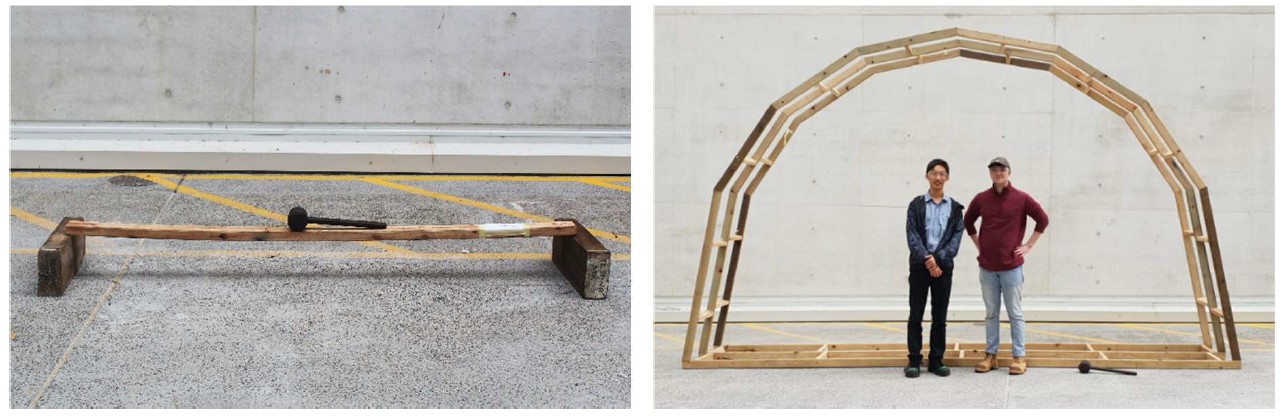
Video has also been used to measure structural behaviour directly. Related work assessed the viability of visual vibrometry, the measurement of structural vibration of timber structures from video, for use in structural engineering (DOI:10.1007/978-981-15-8079-6_127).
Related Publications
Hodge, G., & Gattas, J. M. (2025). A semi-automated method for verification and reliability assessment of network-scale bridge asset data. Advanced Engineering Informatics, 68, 103564. https://doi.org/10.1016/j.aei.2025.103564
Hodge, G., & Gattas, J. M. (2025). Semi-automated methods for detection and measurement of bridge assets from variable aerial LiDAR. Australian Journal of Civil Engineering, 24(1), 92–108. https://doi.org/10.1080/14488353.2025.2533670
Hodge, G., & Gattas, J. M. (2022). Geometric and semantic point cloud data for quality control of bridge girder reinforcement cages. Automation in Construction, 140, 104334. https://doi.org/10.1016/j.autcon.2022.104334
Slinger, V., Lao, D., Nguyen, V., Singh, S., & Gattas, J. (2021). Assessing the viability of visual vibrometry for use in structural engineering. In EASEC16 (pp. 1353–1363). Springer. https://doi.org/10.1007/978-981-15-8079-6_127
Luo, D., Gattas, J. M., & Tan, P. S. S. (2020). Real-time defect recognition and optimized decision making for structural timber jointing. In DigitalFUTURES 2020 international conference. https://doi.org/10.1007/978-981-33-4400-6_4