Timber-Cardboard Composites
Part of the Timber & Bio-Based Construction research theme.
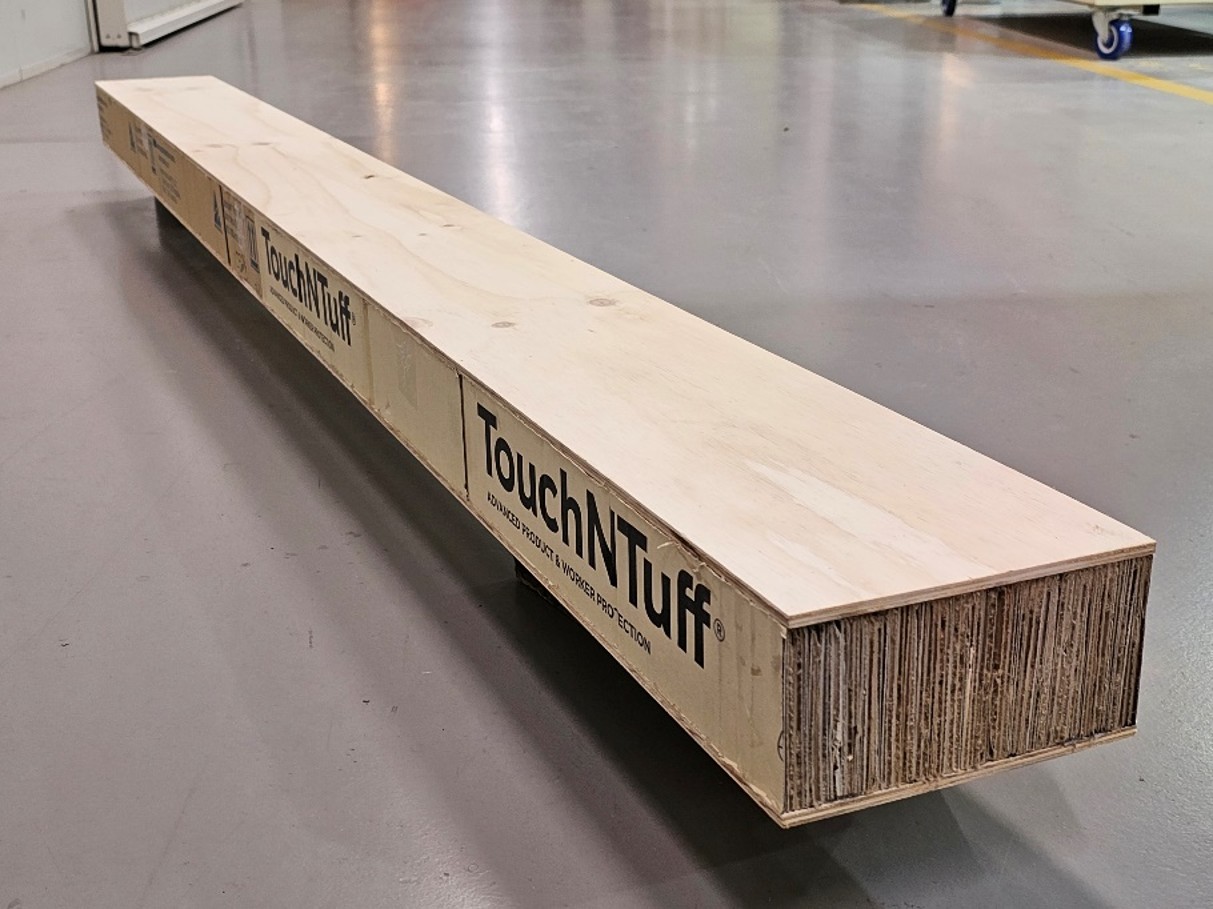
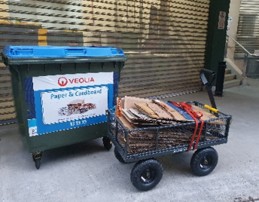
Timber-cardboard sandwich (TCS) panels pair thin timber facings with a core of laminated corrugated cardboard. The core can be made from recycled cardboard or from scrap packaging, so most of a panel’s volume is waste material, while the timber facings carry most of the structural load. The resulting panels are lightweight, low in cost, and bio-based, which suits them to temporary and transportable housing.
Research in the Lab characterises the structural behaviour of TCS panels as beams, columns, and wall panels, develops models to predict their capacity, and tests their long-term performance under outdoor exposure.
Timber-Cardboard Sandwich Beams
TCS beams were made with low-cost timber facings and a block-laminated corrugated cardboard core, using either recycled or scrap cardboard. Beams with scrap cores are up to 91% waste by volume (76% by weight) and performed equivalently to beams with recycled cores. Bending behaviour was governed by the timber facings, with strong composite action and no core shear or debonding failures, so the strength, stiffness, and failure mode of a beam could be predicted with composite sandwich beam theory. At comparable densities, TCS beams were stronger in bending than conventional foam-core structural insulated panels. Further information: DOI:10.1016/j.engstruct.2024.117678.
Timber-Cardboard Columns
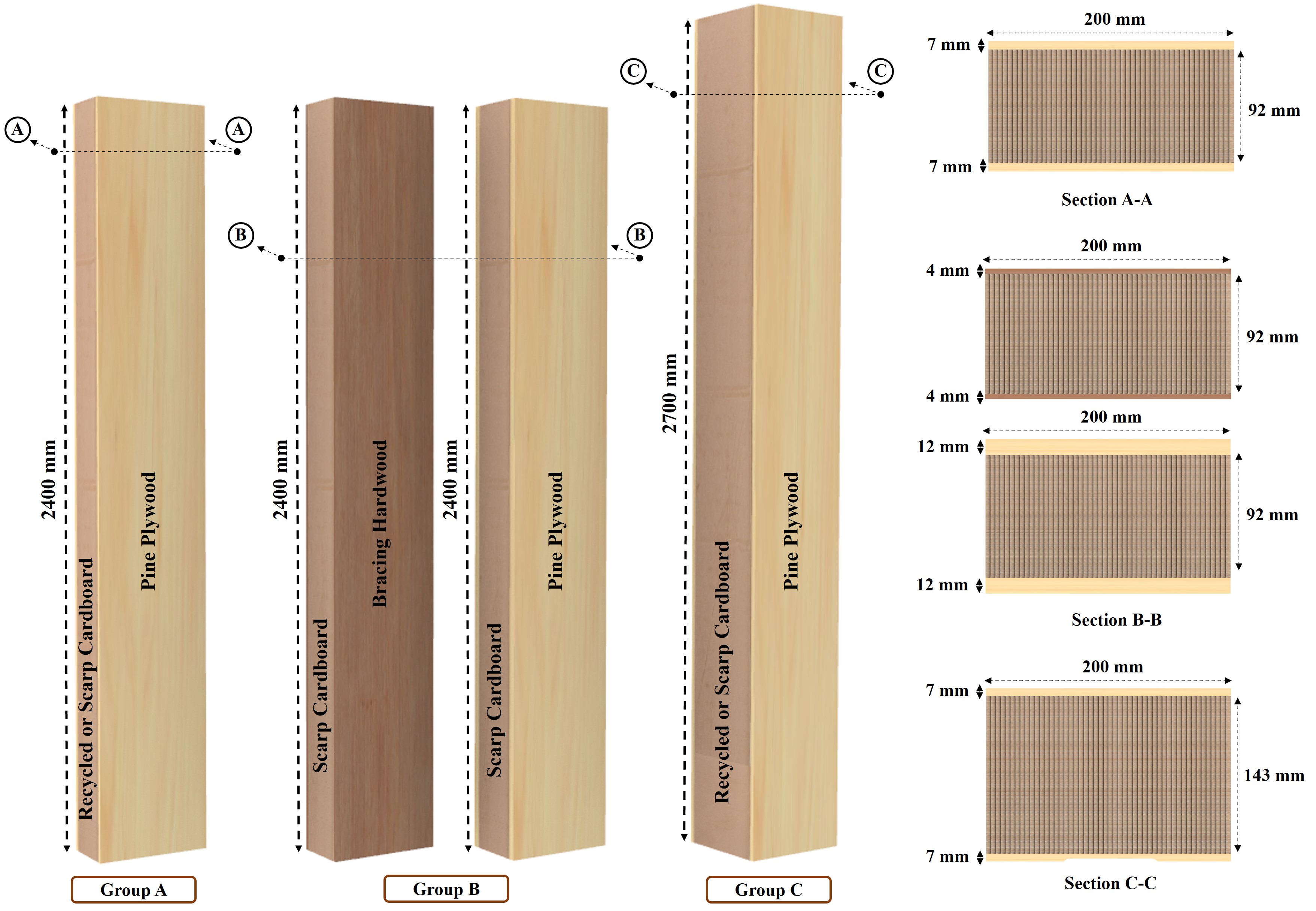
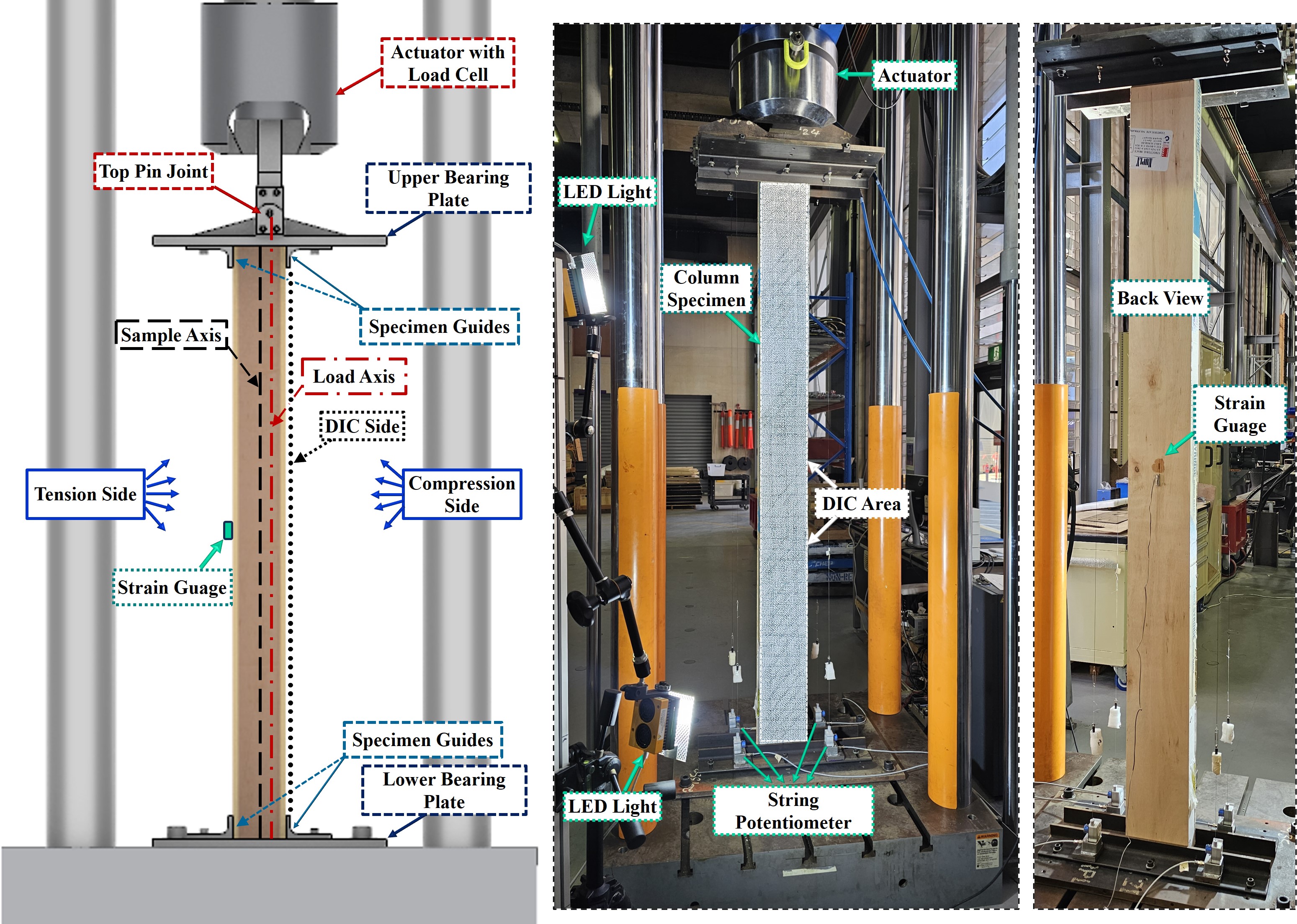
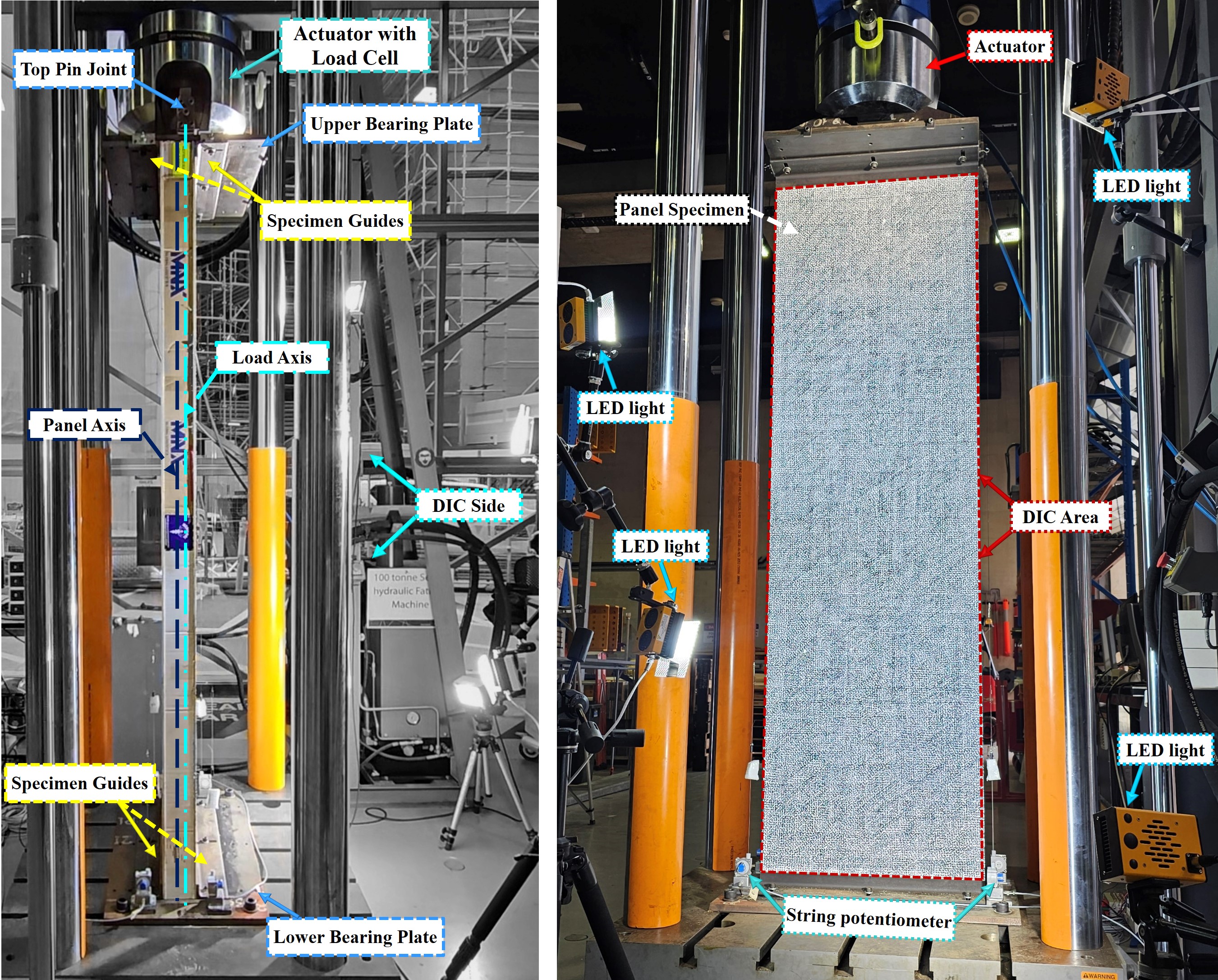
Use as columns and wall panels requires TCS elements to carry compression. Thirty TCS columns were tested under eccentric axial load, varying the cardboard core source, the type and thickness of the timber facings, and the slenderness ratio. Columns failed by crushing of the timber facings, and their capacity was controlled by the facing material, with no observed contribution from the cardboard core to failure. Analytical models developed from the tests predicted capacity and lateral deflection, with ultimate load predictions within 5% for all column types studied. Further information: DOI:10.1016/j.conbuildmat.2024.137365.
Web-Core Wall Panels
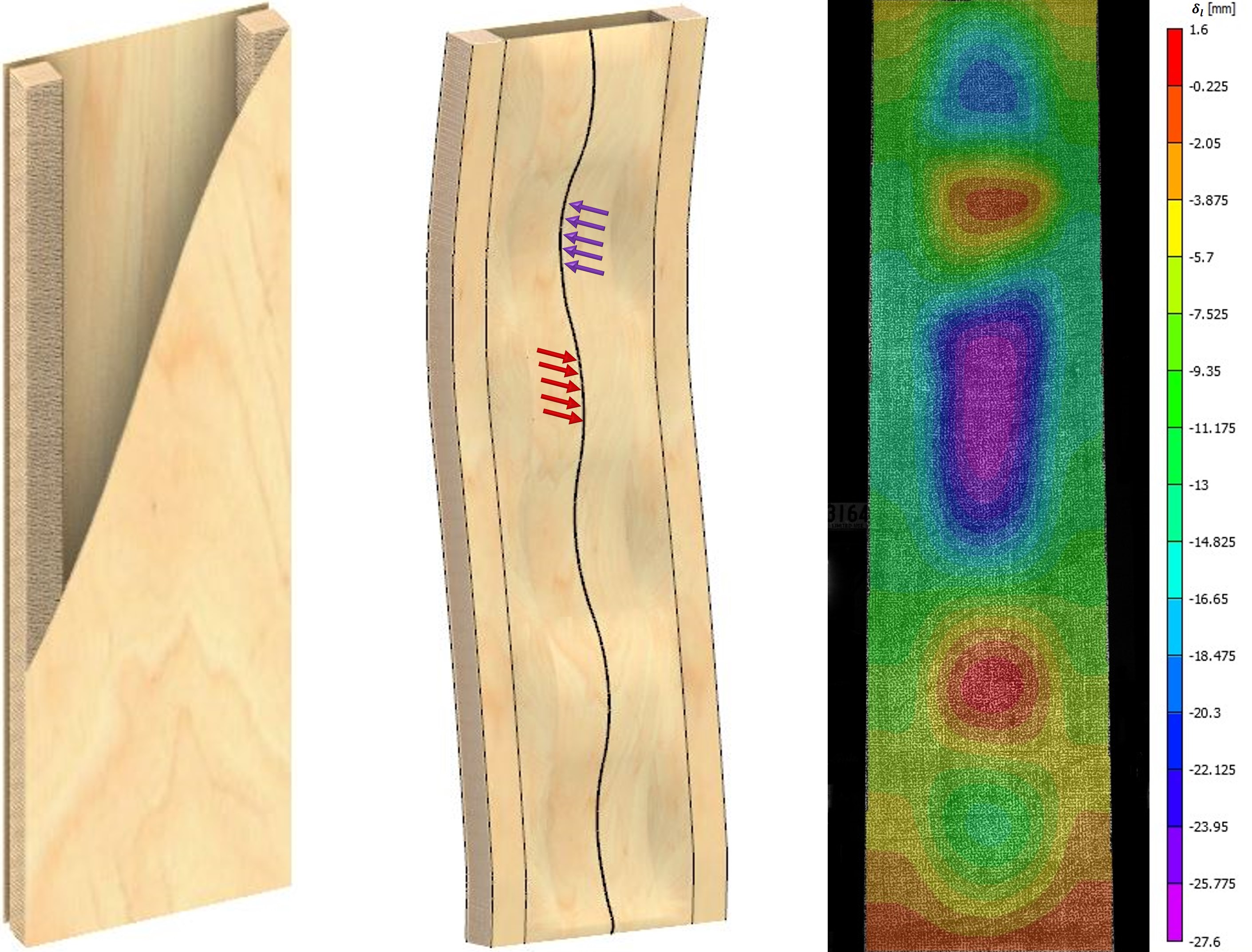
The timber-cardboard web-core sandwich (TCWS) panel replaced the continuous cardboard core with spaced cardboard studs to reduce material use and weight. Wall panels 2400 mm long, with core spacings from 300 mm to 600 mm, were tested under eccentric axial compression and modelled numerically, characterising the progression from elastic to plastic buckling of the facings. TCWS panels had close to half the density of standard TCS panels with equivalent weight-specific performance, and up to 33% higher strength than foam-core and other bio-based sandwich panels of similar density. Further information: DOI:10.1016/j.istruc.2025.108315.
Twelve full-scale TCS beams with recycled or scrap cardboard cores were held under sustained bending load for up to nine months in uncontrolled outdoor conditions, then tested to failure. Beams with recycled cores crept more consistently than those with scrap cores, and both types met deflection limits under short-term loading. Weather exposure affected creep deformation, but the bending strength and failure modes measured after creep matched those of the control beams. Further information: DOI:10.1080/14488353.2026.2633031.
Temporary Housing Applications
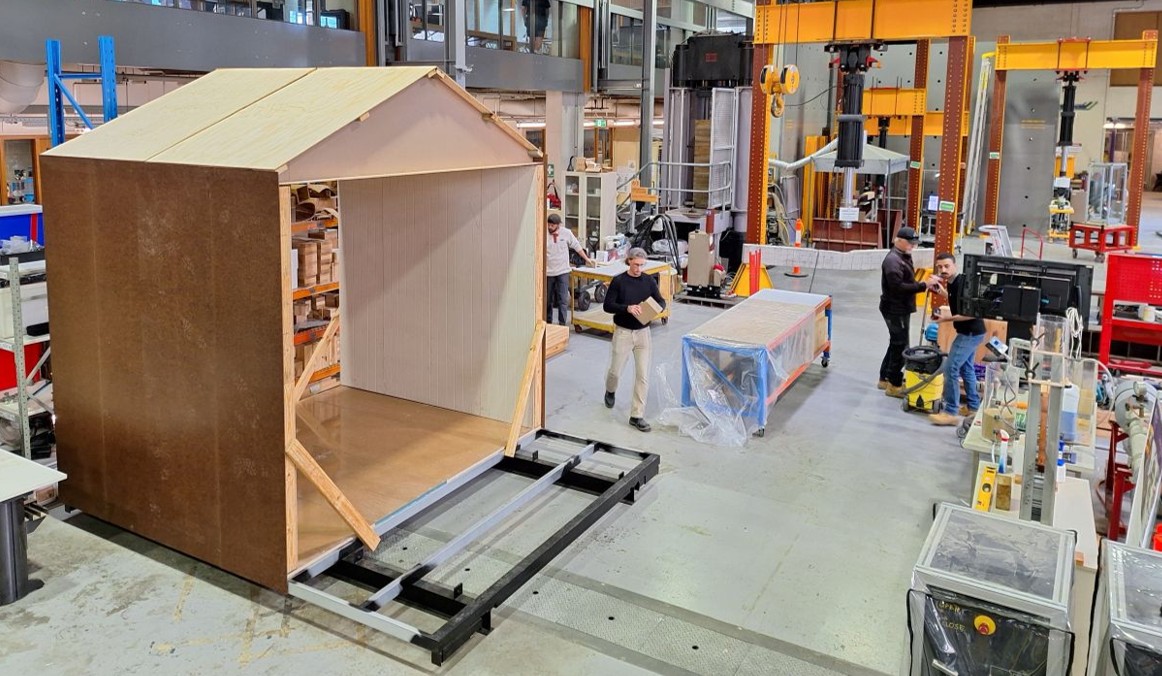
TCS panels have been applied to the design and optimisation of panels for temporary housing (DOI:10.1007/978-981-96-9917-9_47) and to a case study of bio-based temporary housing that weighs housing needs against sustainability outcomes (DOI:10.52202/080513-0336). For more information, see A Bio-Based Temporary Housing System for Northern New South Wales.
Prototypes and Exhibitions

Related Publications
Abu-Saleem, M., & Gattas, J. M. (2026). Short- and long-term creep performance of timber-cardboard sandwich beams. Australian Journal of Civil Engineering, 1–20. https://doi.org/10.1080/14488353.2026.2633031
Abu-Saleem, M., & Gattas, J. M. (2025). Timber-cardboard web-core sandwich panels for lightweight housing applications. Structures, 73, 108315. https://doi.org/10.1016/j.istruc.2025.108315
Abu-Saleem, M., Baber, K., Gattas, J. M., Gilbert, G., Bihan, M. L., Rose, A., & Ximenes, F. (2025). Aligning needs and sustainability: A case study of biobased temporary housing. In World conference on timber engineering 2025 (pp. 2752–2761). World Conference On Timber Engineering 2025. https://doi.org/10.52202/080513-0336
Abu-Saleem, M., & Gattas, J. M. (2025). Design and optimisation of timber-cardboard sandwich panels for temporary housing applications. In Proceedings of the 18th east asia-pacific conference on structural engineering and construction, volume 2 (pp. 351–358). Springer Nature Singapore. https://doi.org/10.1007/978-981-96-9917-9_47
Abu-Saleem, M., & Gattas, J. M. (2024). Eccentric compression behaviour of hybrid timber-cardboard sandwich columns. Construction and Building Materials, 440, 137365. https://doi.org/10.1016/j.conbuildmat.2024.137365
Abu-Saleem, M., & Gattas, J. M. (2024). Fabrication and structural characterisation of hybrid timber-cardboard sandwich beams. Engineering Structures, 305, 117678. https://doi.org/10.1016/j.engstruct.2024.117678