Rigid-Foldable Geometry
Part of the Origami-Inspired Design research theme.
Rigid-foldable origami and kirigami are a select group of patterns that consist of panels that can move continuously between folded states by rotating around crease lines without deformation. This makes them useful in engineering applications, as they can be folded from rigid (non-paper) engineering materials.
Miura-Derivative Geometries
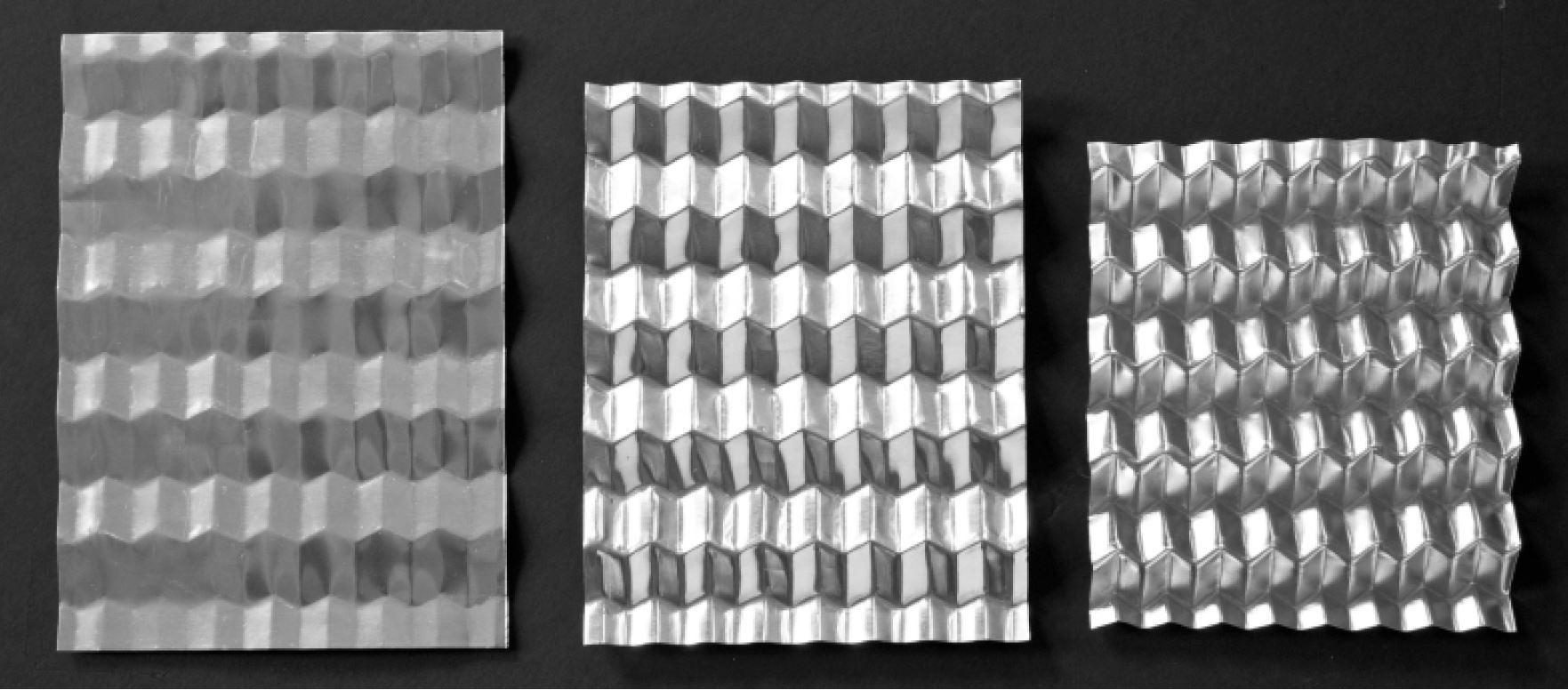
The Miura pattern is a fundamental rigid-foldable pattern that is widely used in engineering, architecture, and design. First-level derivatives of the Miura pattern were defined by altering one of five characteristics: crease orientation, alignment, developability, flat-foldability, or rectilinearity. A consistent parameterisation for these patterns, validated with physical prototypes, clarified the relationships between them and showed how they can be combined into complex geometries. Further information: DOI: 10.1115/1.4025380.
Rigid-Foldable Kirigami
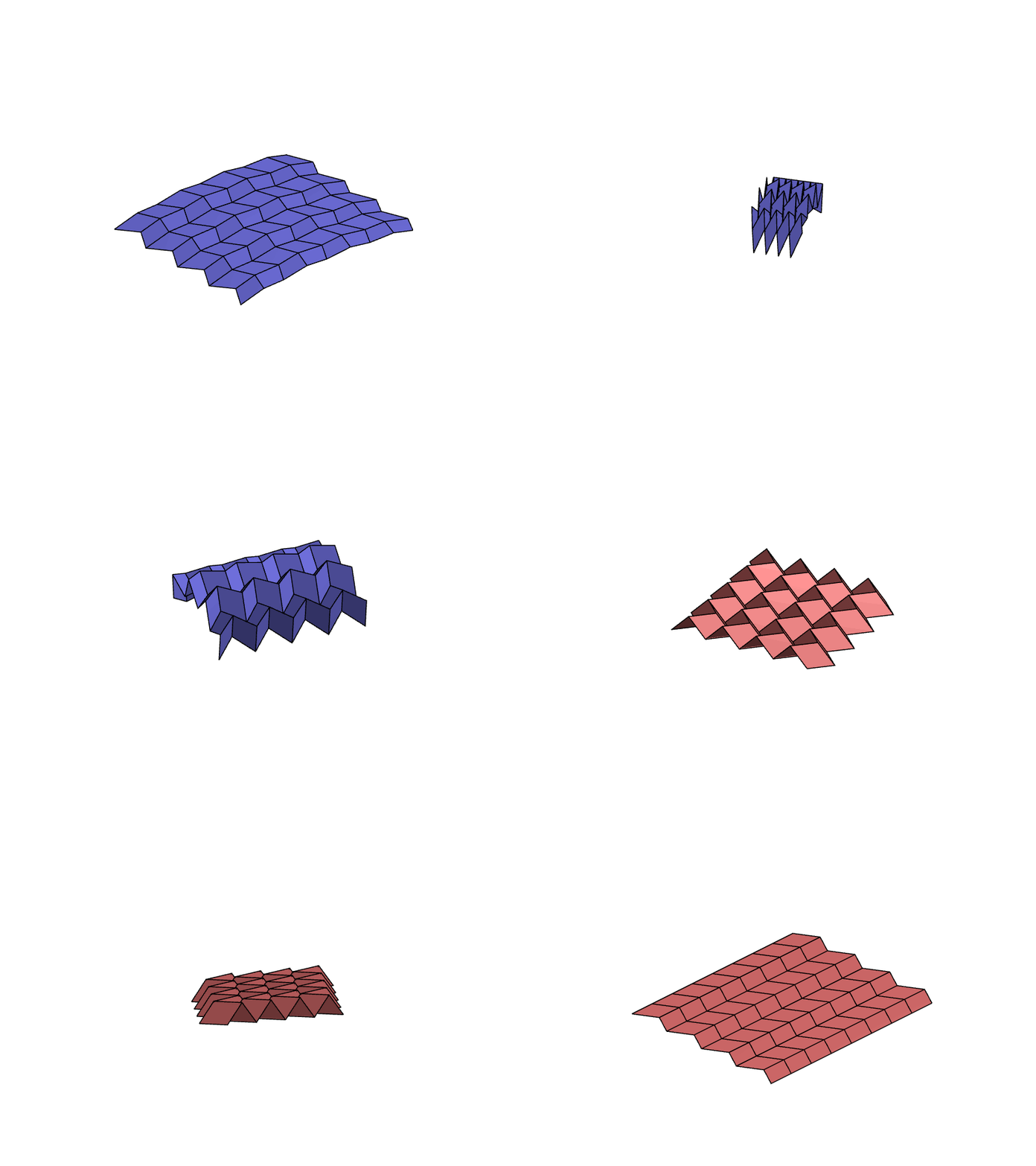
Kirigami patterns are not created from a continuous sheet, but instead may contain slits or punched out portions. They may still be rigid-foldable, with the cube and eggbox patterns being examples of this. Similar to the Miura pattern, they are both foldable with single DOF, are composed of a single repeated plate, and have derivative geometries capable of forming a range of curvatures. Further information: DOI: 10.1260/0266-3511.30.2.99.
Superimposed Rigid Origami with Multiple States
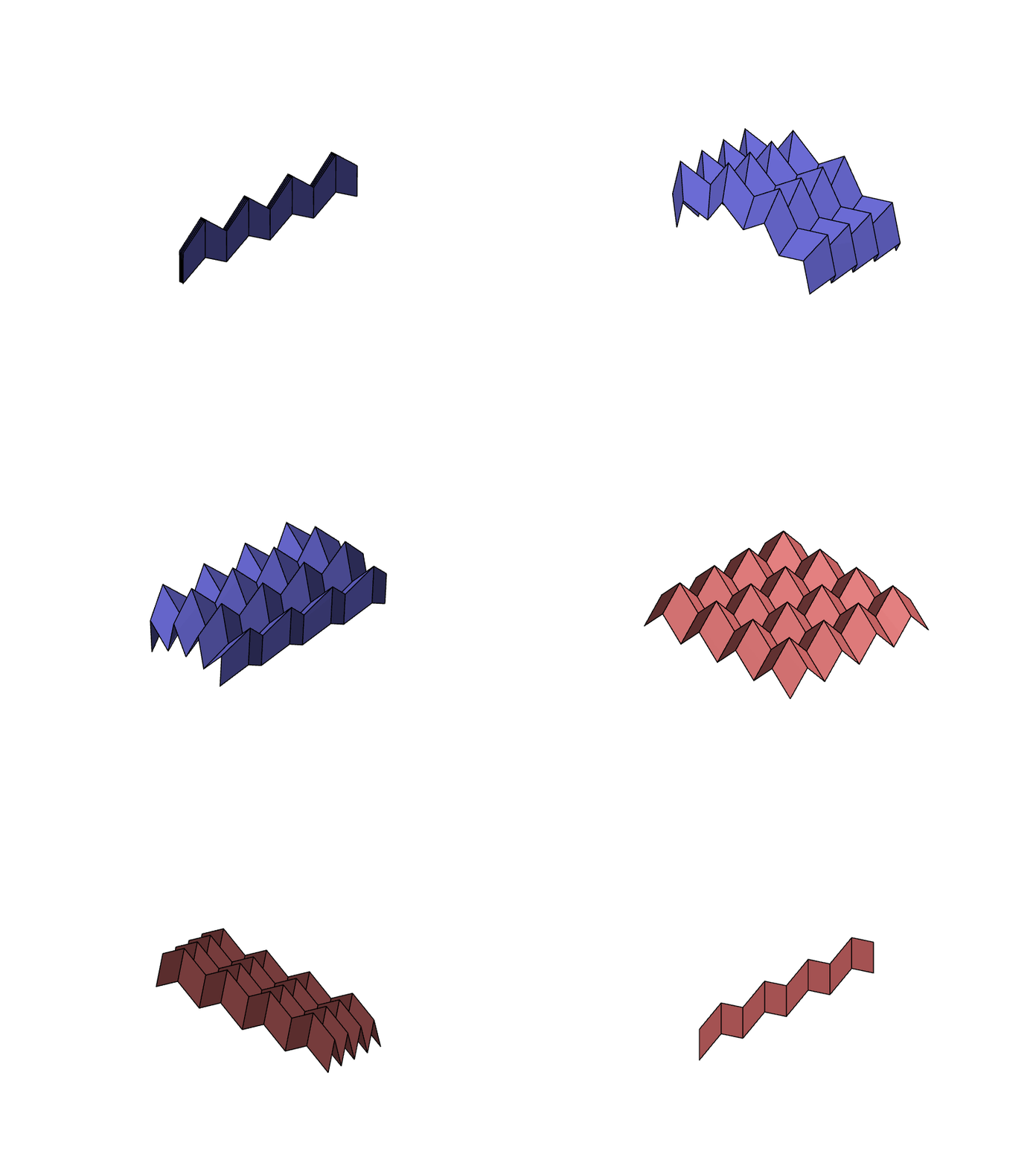
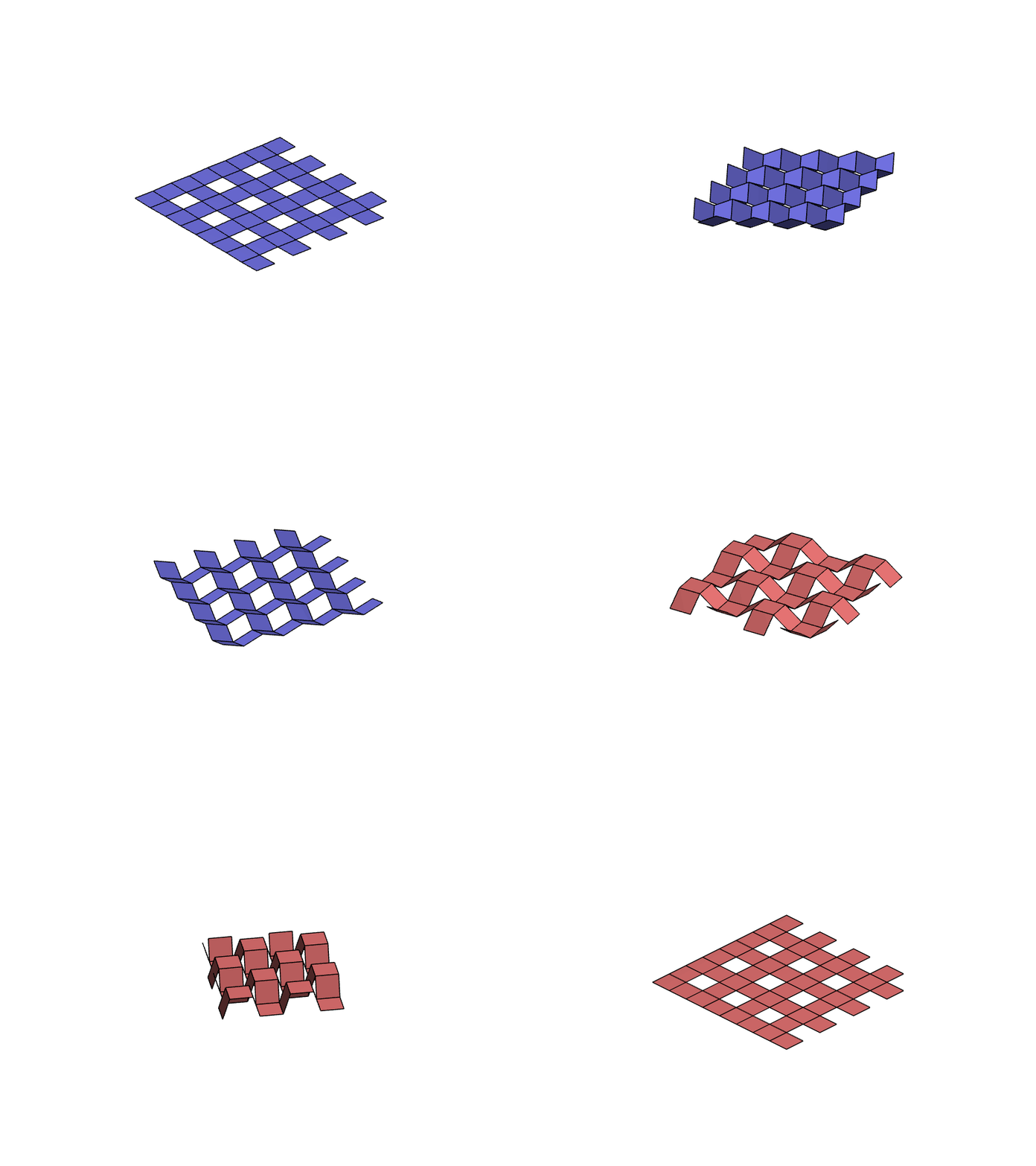
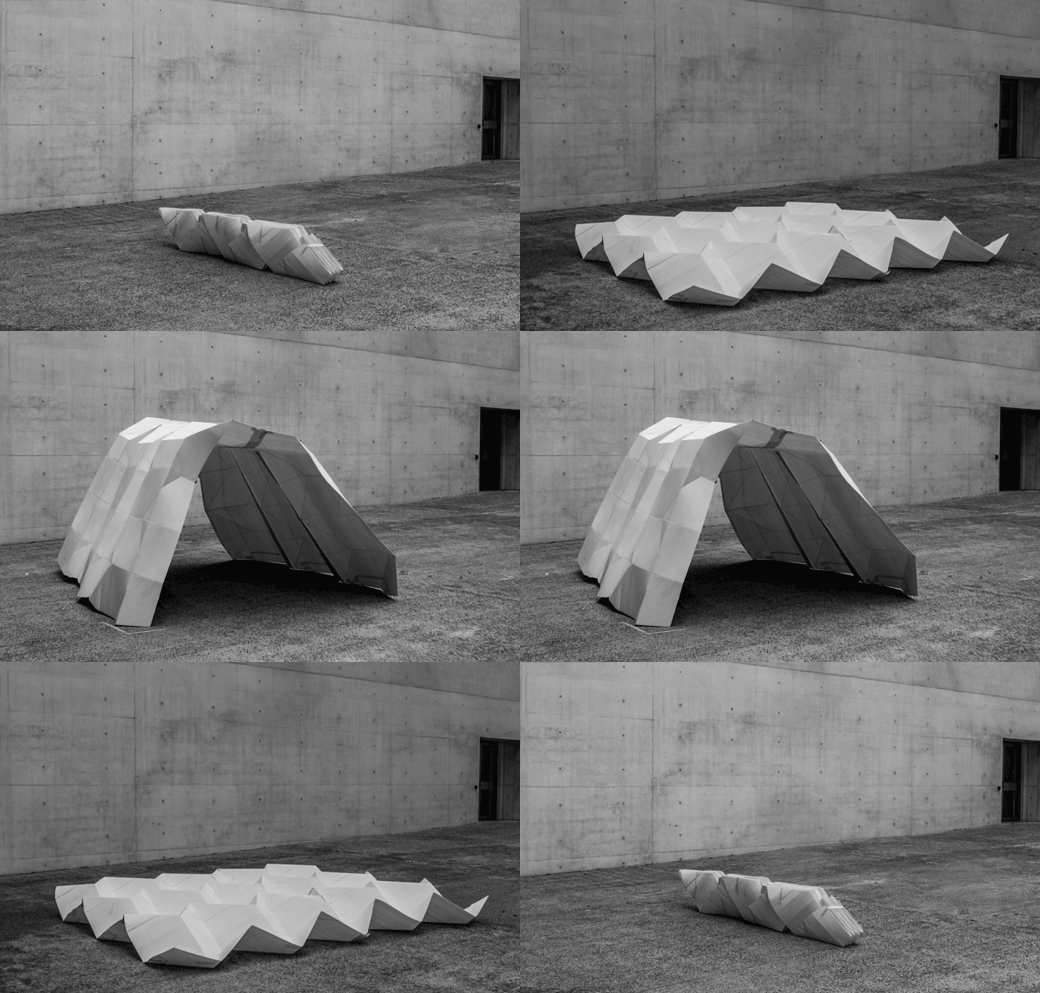
A new method allowed multiple distinct, rigid-foldable crease patterns to be superimposed on the same sheet, maintaining the kinematic independence and 1-DOF mobility of each pattern. The approach used the cross-crease vertex, a special configuration featuring two pairs of collinear crease lines. The method was applied to compactly fold non-flat-foldable structures, and to create sequent folding origami capable of transitioning between multiple states without unfolding. Further information: DOI: 10.1038/srep36883.
Origami Metamaterials
Rigid-foldable patterns also form the basis of mechanical metamaterials whose stiffness and shape can be programmed. A tubular metamaterial built from waterbomb bases deformed by a mix of rigid origami motion and structural deformation: it reached near-zero stiffness, then entered a contact phase in which stiffness rose sharply, at a load set by the geometry and assembly of the waterbomb bases. Because the profile of the tube changed with the applied far-field force, a single global force produced controlled local actuation, without embedded sensors or actuators. Further information: DOI: 10.1016/j.apmt.2019.100537.
A second class of metamaterial integrated elastic components with one-degree-of-freedom kinematic bases, so that each component deformed along a designed path. This allowed the stress-strain response to be prescribed, including multistage strain softening, and shape memory alloy components allowed the response to be switched in situ. Further information: DOI: 10.34133/research.0715.
Code and Software
 Rigid Origami Toolbox
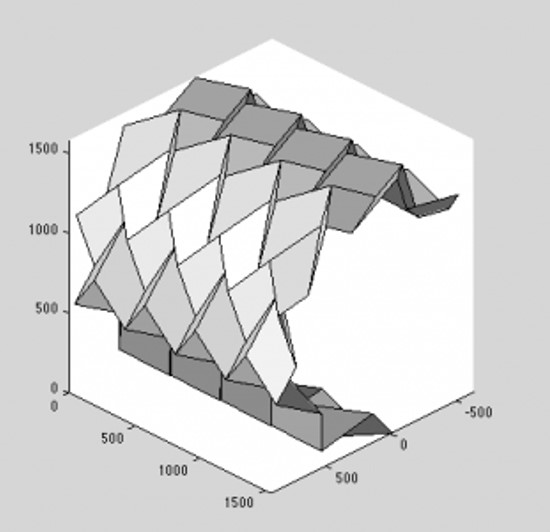
A Matlab toolbox to support research and design of origami-inspired structures
Related Publications
Li, H., Li, W., Yang, H., Gattas, J. M., Chen, Q., & Li, Y. (2025). One-degree-of-freedom mechanical metamaterials with arbitrary prescribability and rapid reprogrammability of force–displacement curves. Research, 8. https://doi.org/10.34133/research.0715
Mukhopadhyay, T., Ma, J., Feng, H., Hou, D., Gattas, J. M., Chen, Y., & You, Z. (2020). Programmable stiffness and shape modulation in origami materials: Emergence of a distant actuation feature. Applied Materials Today, 19. https://doi.org/10.1016/j.apmt.2019.100537
Liu, X., Gattas, J. M., & Chen, Y. (2016). One-DOF superimposed rigid origami with multiple states. Scientific reports, 6, 36883. https://doi.org/10.1038/srep36883
Xie, R., Chen, Y., & Gattas, J. M. (2015). Parametrisation and application of cube and eggbox-type folded geometries. International Journal of Space Structures, 30(2), 99–110. https://doi.org/10.1260/0266-3511.30.2.99
Gattas, J. M., & You, Z. (2013). Rigid-foldable piecewise geometries. In F. Escrig & J. Sanchez (Eds.), New proposals for transformable architecture, engineering, and design. Proceedings of the first conference transformables 2013. School of architecture seville, spain (pp. 319–324). Editorial Starbooks.
Gattas, J. M., Wu, W., & You, Z. (2013). Miura-base rigid origami: Parameterizations of first-level derivative and piecewise geometries. Journal of mechanical design, 135(11), 111011. https://doi.org/10.1115/1.4025380